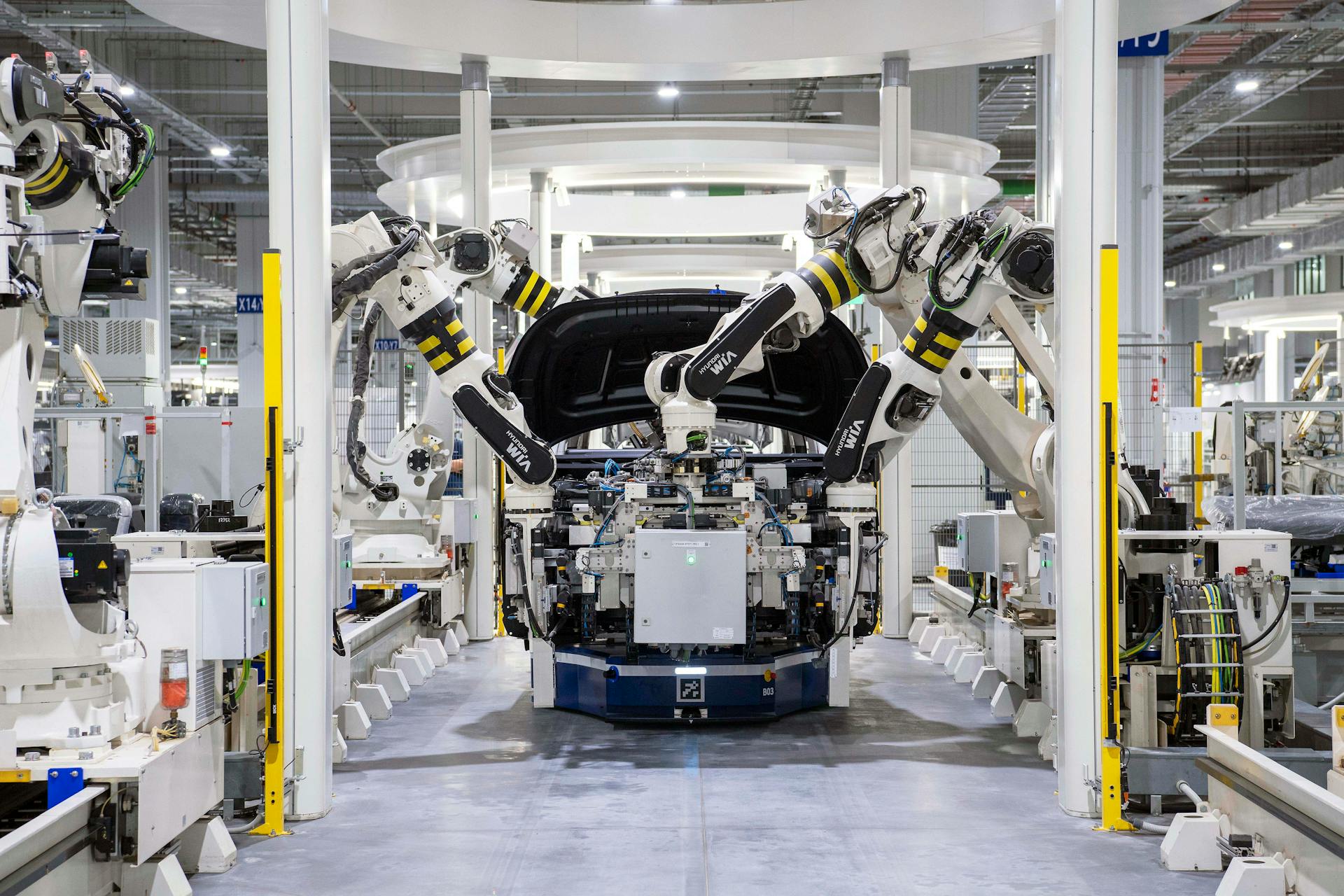
About five years ago, as I started my job at WestWave Capital, I got excited to check out robotics startups. My main objective was to go see some cool robotics demos. I wasn’t sure we would invest in robotics — the category is traditionally seen as capital intensive and difficult to scale.
However, we have recognized that there is a tremendous opportunity to invest in robotics today. Hardware has gotten cheaper, and artificial intelligence is incredibly powerful. The confluence of these trajectories is enabling a new generation of robotics companies.
Robotics finally has reached escape velocity, with startups receiving record funding ranging from special-purpose AMRs to generalist humanoids developers.” Sergey Litvinenko says, CEO and cofounder at Koop. “At Koop, we support more than 100 robotics companies, and are seeing increased customer demand across the board.
Robotics enables software to do critical real world tasks.
We spoke to around 50–60 of the best funded robotics startups of the past many years, as well as investors and customers across industries to develop a robust thesis. We are thrilled to be investors in several robotics companies already, and look forward to backing a new generation of founders who can leverage robots. Below are three of the key characteristics we are looking for, in the robotic companies we are backing.
I. Commodity hardware, sophisticated software
We like robots that build a simple off the shelf hardware stack, and instead use sophisticated (AI-driven) software to perform complex tasks.
Commodity hardware gives companies several advantages:
Startups can iterate faster. Companies don’t have to wait for hardware to be rebuilt, for parts to show up, etc. Significant product iteration happens at the software layer, and the company uses easily available
Easy to scale. You can order a single robotic arm for testing & iteration when you’re a startup. When you’re ready to scale, the same manufacturer can ship you 1000 arms. You don’t need to spin up manufacturing, you don’t need to worry about sourcing parts or hiring factory workers.
One of our portfolio companies, Andromeda Surgical, is building robots to perform automated surgeries. Andromeda is led by Nick Damiano, who has had tremendous success building med tech companies in the past. Nick recognizes the shift in focus for robotics companies, from custom hardware to software.
Surgical robotics companies have historically focused on building the best custom hardware. That’s changing now due to two factors: better software capabilities including AI and increasing availability of off-the-shelf parts like KUKA arms. In the future, I see hardware becoming commoditized and software driving most of the value. Companies that embrace this trend will be able to move much faster than their old school counterparts. – Nick Damiano
II. Easy deployment
A previous generation of robotics companies made the broad assumption that enterprises would buy robots, due to forward-looking promises around efficiency and cost. In our research, we learned that even if companies can make strong economic justification for automation, actually purchasing and then deploying robotics is a huge hurdle. Some companies even required that the founders themselves show up onsite to install robots — which is impossible to scale. Too many companies assumed that if they built a good robot, customers would automatically buy.
Another category of companies plan to modify customer sites to suit their robots’ requirements. They may charge customers for non-recurring engineering work or for substantial installation costs.
Instead, we like to partner with robotics founders who have a deep understanding of existing customer workflows. For example, one of our portfolio companies (still in stealth) spent a full year ensuring that their customers’ existing workflows would not be disrupted by their robot. They also figured out hardware configurations that could be installed in 15 minutes by most contractors.
Convincing a customer to try a robot because it’s cool tech may or may not work. Making the argument that a robot can show up to your jobsite tomorrow and start working on projects that humans don’t even want to touch — that’s a no brainer.
III. SaaS-like business models
Thanks to commodity hardware, these robotics companies make most of their money on the software. This allows them to build business models that resemble SaaS companies — i.e. business models with around 70–80% gross margins. This is really only possible because startups today don’t have to build out their own hardware and manufacturing efforts.
Additionally, customers across verticals are comfortable with SaaS-like business models where they pay a subscription for ongoing services — software and hardware.
One of the key reasons we push companies to drive towards higher gross margins is because of feedback we got from growth stage investors. They are much less concerned about novel thesis areas. They get more excited about fast growing businesses in large markets. If they come across two opportunities, with ARR growing at roughly similar rates, with roughly similar TAM, they will consistently invest in the company with higher gross margins. If robotics companies cannot achieve high gross margins, they will struggle to attract capital to scale further.
Links
https://www.westwavecapital.com/
https://www.andromedasurgical.com/
Audio
If you prefer to listen to this as an AI-generated podcast, here you go: https://drive.google.com/file/d/1osnjUyDywD1sQZIUlyxc1bTcY-qc1-Nb/view?usp=drive_link. This audio was generated with Google NotebookLM.